Case no.KG-019
Horse Racing Terms: A Plain Glossary for Beginners
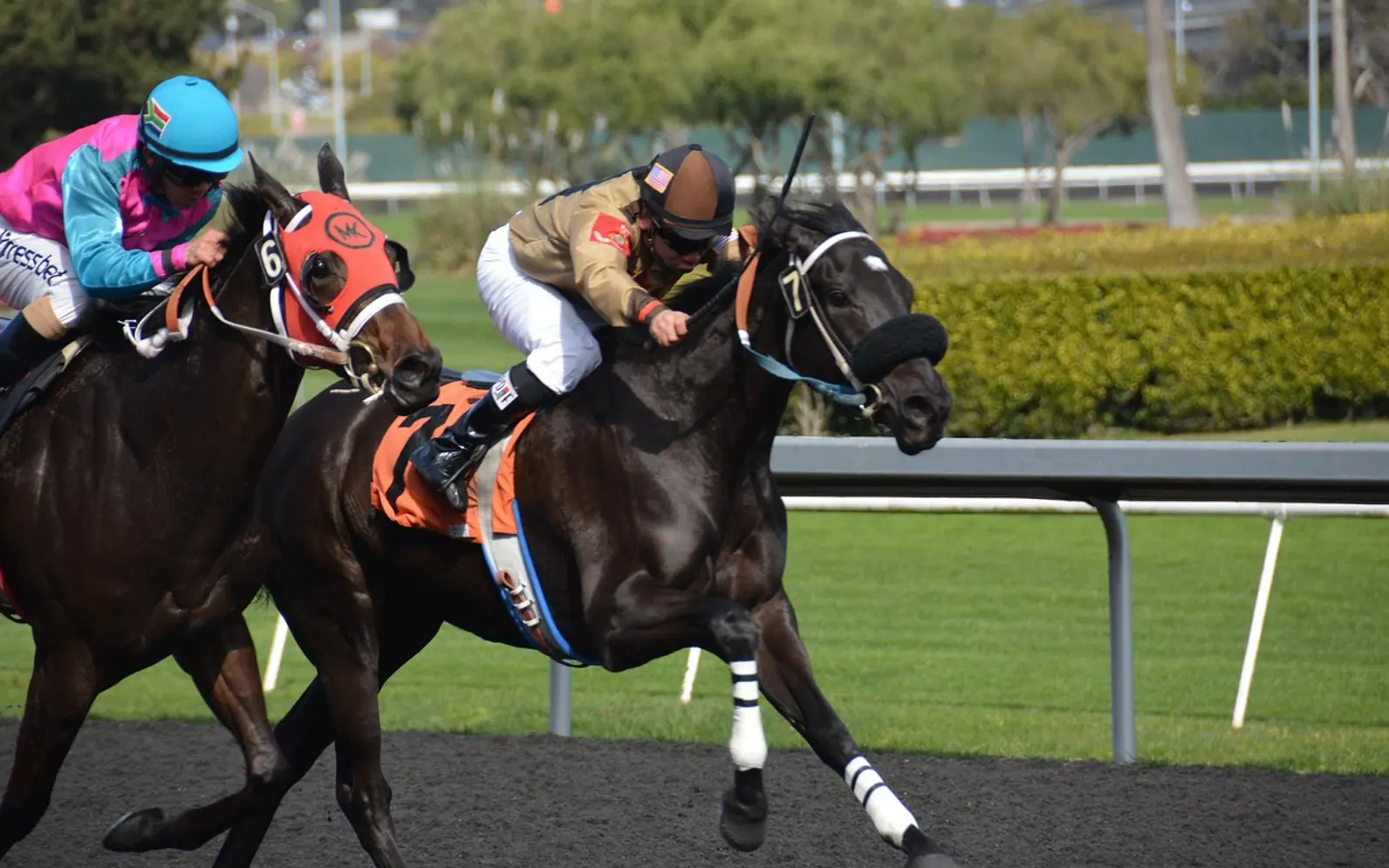
Racing talk can sound like a code. A "maiden claimer over six furlongs on a sloppy track" is a perfectly ordinary race once you know the words. This glossary groups the terms a newcomer hears most, so you can read a program or follow a broadcast without guessing.
Definitions follow North American usage unless noted. British and Irish racing share most of the vocabulary but use a few words differently. The material is for adults aged 18 and over.
The track and the distance
- Furlong – one eighth of a mile, or 220 yards, a little over 200 metres. Sprint and route distances are both given in furlongs or miles.
- Sprint / route – loosely, a sprint is a shorter race and a route a longer one. In the US the dividing line is commonly drawn at about a mile.
- Dirt, turf, synthetic – the three main racing surfaces. Many horses run noticeably better on one than the others.
- Track condition – how the surface is playing. Dirt is described with words such as fast, good, muddy and sloppy; turf with firm, good, yielding and soft. In Britain and Ireland this is called the going.
- Stretch – the final straight before the finish line. The "far turn" leads into it.
- Post / post position – the stall a horse starts from in the gate, numbered from the inside rail outward.
- Post time – the scheduled start of a race.
The horse
- Thoroughbred – the breed used in most flat racing. Northern Hemisphere Thoroughbreds all share an official birthday of 1 January, whatever their actual foaling date.
- Colt / filly – a young male and a young female, generally four years old or younger.
- Horse / mare – the older equivalents: an ungelded male and a female aged five or more.
- Gelding – a castrated male of any age.
- Maiden – a horse that has not yet won a race.
- Sire / dam – father and mother. Breeding lines appear under each runner in the program.
The race
- Maiden race – a race only for horses that have never won.
- Claiming race – every runner is for sale at a stated price. Eligible buyers can "claim" a horse before the race and take it over afterwards, win or lose. It keeps fields fairly even.
- Allowance race – a step up from claiming, with entry conditions such as number of past wins.
- Stakes race – the top tier, usually with higher prize money and entry fees. The best are graded (Grade 1, 2 or 3 in North America) or, in Europe, given Group status.
- Handicap – a race where an official assigns different weights to even out the field. Our explainer on handicapping in horse racing covers both meanings of the word.
- Purse – the prize money for a race, split among the leading finishers.
- Field – all the runners in a race.
People on the day
- Jockey – the rider. See what a jockey does for the full job.
- Trainer – prepares the horse and decides where and when it runs.
- Owner – pays the bills and owns the colours (silks) the jockey wears.
- Stewards – officials who enforce the rules and review any incident during a race.
The result
- Length – the length of a horse, used to measure gaps between finishers.
- Nose, head, neck – margins smaller than a length, from tightest to widest.
- Photo finish – a finish too close to call by eye, settled from a camera image at the line.
- Dead heat – an exact tie for a position.
- Inquiry / objection – a review of possible interference. Results are not official until it ends.
- In the money – finishing in a paying position, usually the first three.
The betting board
| Term | Meaning |
|---|---|
| Chalk | The betting favourite |
| Longshot | A horse at big odds |
| Morning line | The track's pre-betting forecast of the odds |
| Scratch | A horse withdrawn before the race |
| Exotic | A bet linking several horses, such as an exacta or trifecta |
| Entry | Two or more horses coupled as one betting interest, often shown as 1 and 1A |
For the biggest events on the calendar, our page on the Triple Crown explains how three spring races became the sport's best-known prize.
A note before betting
Knowing the words makes a race easier to follow. It does not make betting on it profitable. If you do bet, keep it to adult spending money you can lose, fix the amount beforehand with a deposit limit, and check that racing wagers are permitted where you are.
Something to add?
A short note is enough.
Pre-flight
Before any deposit, tick these off
Thirty seconds. Every time.
- I know the exact amount I can afford to lose today
- A deposit limit is switched on for this account
- I have checked the licence with the named regulator
- I have read the bonus terms, or I am playing without one
- My phone alarm is set for the time I stop