Case no.KG-027
Race Horse Breeds: Thoroughbreds, Quarter Horses and Standardbreds
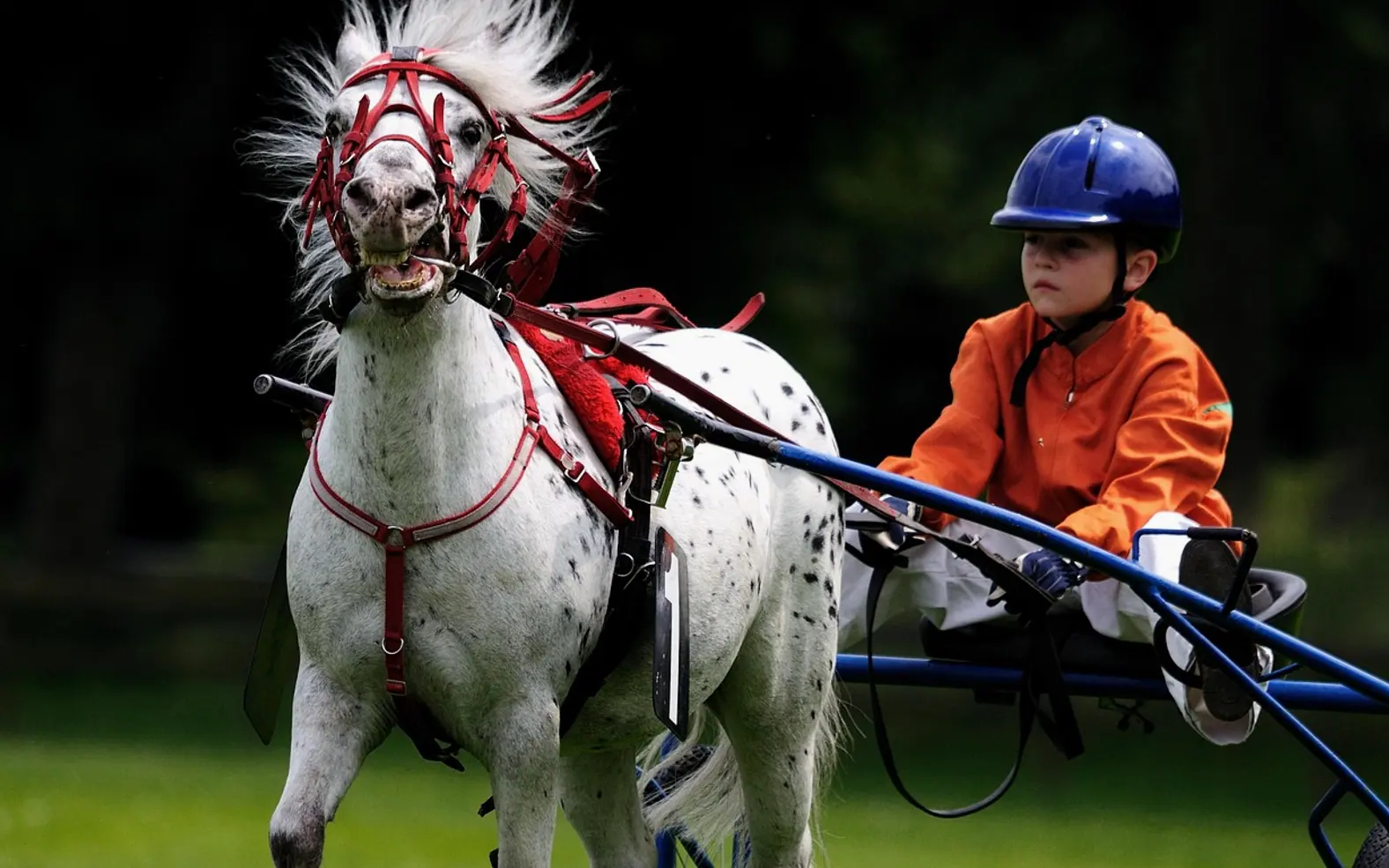
Three breeds dominate organised horse racing in North America: the Thoroughbred, which runs flat races from sprints to long distances; the American Quarter Horse, built for explosive dashes measured in yards; and the Standardbred, which races in harness pulling a light two-wheeled cart. Arabians and a few other breeds also race, on a smaller scale.
Each breed produces a different kind of race, with its own distances, tactics and form patterns. If you follow racing or look at the betting, it helps to know which one you are watching. The overview is meant for adult readers.
The breeds side by side
| Breed | Type of racing | Typical distances | Known for |
|---|---|---|---|
| Thoroughbred | Flat and jump racing under saddle | About five furlongs to well over two miles | Speed sustained over distance |
| Quarter Horse | Short straight sprints under saddle | Mostly a few hundred yards | Acceleration from the gate |
| Standardbred | Harness racing, trotting or pacing | Commonly one mile | Holding a fast gait without breaking stride |
| Arabian | Flat racing and endurance riding | Flat races plus very long endurance rides | Stamina and toughness |
Thoroughbreds
The Thoroughbred was developed in England in the late seventeenth and eighteenth centuries. Every registered Thoroughbred traces its male line back to three foundation stallions, the Byerley Turk, the Darley Arabian and the Godolphin Arabian, crossed with native mares.
These are the horses of the Kentucky Derby, Royal Ascot and most racing seen on television. Registries require foals to be conceived by natural mating, so artificial insemination is not allowed for registered Thoroughbreds. Race distances are given in furlongs and miles; our guide to what a furlong is converts them. The sport's biggest American prize, the Triple Crown, is open only to three-year-old Thoroughbreds.
Quarter Horses
The American Quarter Horse takes its name from the quarter-mile races it ran in colonial America. It is the sprinter of the horse world: heavily muscled hindquarters, a fast break and very high speed over short distances.
- Races are run on straight tracks, mostly over a few hundred yards.
- Distances are given in yards rather than furlongs.
- Races are over in seconds, so the start decides a great deal.
- Photo finishes are common, with margins often measured in noses and heads.
The breed's best-known race, the All American Futurity at Ruidoso Downs in New Mexico, is run over a quarter mile, a fitting distance for a horse named after it.
Standardbreds and harness racing
Standardbreds race in harness, pulling a driver in a light cart called a sulky. The breed's name comes from the time standard a horse once had to meet over a mile to be registered.
Harness horses race at one of two gaits, and must hold it the whole way:
- Trotters move diagonal legs together: front left with back right.
- Pacers move the legs on the same side together. Pacing is usually a little faster than trotting.
A horse that "breaks" into a gallop must be eased back to its gait, losing ground, and can be placed lower or disqualified under the rules. Harness racing uses a moving starting gate on the back of a car in many races, and the person in the sulky is a driver, not a jockey, steering from behind rather than balancing in the saddle.
Arabians and others
Arabians are one of the oldest horse breeds and contributed to the Thoroughbred's foundation. They race on the flat in several countries, and they dominate endurance riding, where courses can cover very long distances in a single day. Other breeds, such as the Appaloosa and the Paint Horse, also have racing programmes, usually alongside Quarter Horse meetings.
What this means for following the sport
- Check the breed before reading form. A Quarter Horse time and a Thoroughbred time are not comparable.
- Expect different shapes of race. Quarter Horse races reward the break; Thoroughbred routes reward stamina; harness races reward position and gait control.
- Learn the language. Each branch has its own terms. The horse racing glossary focuses on Thoroughbred racing, the most common branch.
Quick questions
What is the fastest race horse breed?
Over a short sprint, the Quarter Horse. Over longer distances, the Thoroughbred holds its speed better.
Is harness racing the same as trotting?
Trotting is one of the two harness gaits. Pacing is the other.
Can a Thoroughbred run in Quarter Horse races?
In some cases, under rules set by the breed registry and racing authority. Conditions vary.
Watching any branch of racing costs nothing. Betting on it is a different matter: keep it to money set aside for fun with a deposit limit in place, keep it to adults, and confirm the legal position on racing wagers in your area first.
Something to add?
A short note is enough.
Pre-flight
Before any deposit, tick these off
Thirty seconds. Every time.
- I know the exact amount I can afford to lose today
- A deposit limit is switched on for this account
- I have checked the licence with the named regulator
- I have read the bonus terms, or I am playing without one
- My phone alarm is set for the time I stop